
Securing Justice
for People with Mental Illness in Uganda and Kenya
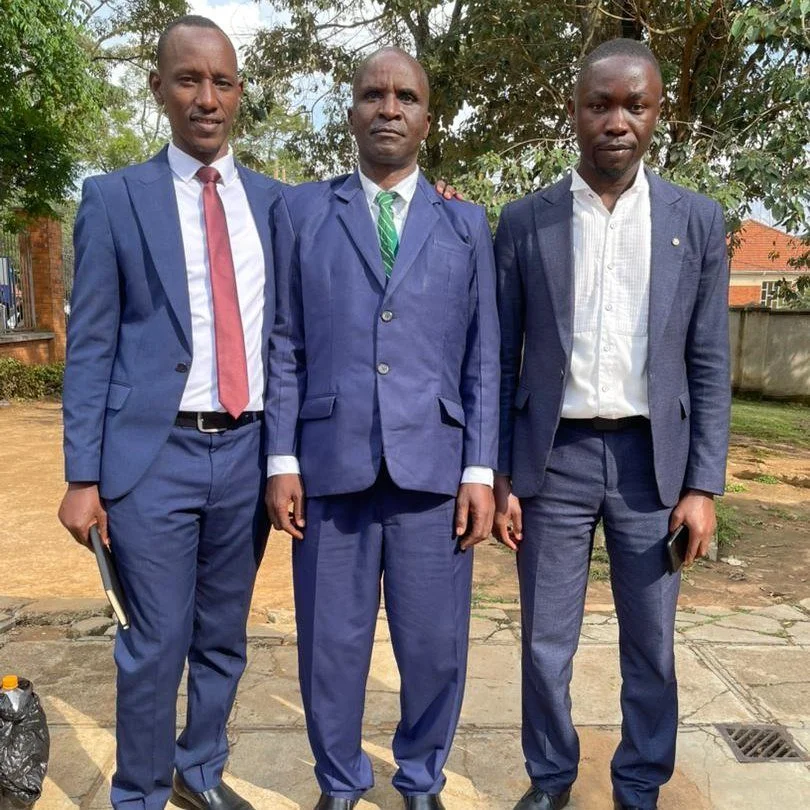
For many years in Uganda and Kenya, people judged unfit to stand trial were detained without trial, without treatment and without any lawful pathway back to court. Justice Defenders has worked to confront this problem at both the individual and national level, ensuring that no person is left in indefinite detention simply because a legal process has stalled.
In Uganda, this work led to a major breakthrough in 2022 when Justice Defenders filed a petition to Parliament challenging the long-standing failure to issue Minister’s Orders. According to the Parliamentary Petition file on pages one through seven, no Minister had issued an order in more than two decades, which meant people were held with no way to resume trial or transfer to a hospital. After engagements with the Minister of Internal Affairs, the Minister of Justice, the Solicitor General, the Director of Public Prosecutions and senior officials in the Uganda Prisons Service, a new national procedure was adopted. This resulted in the review of almost all mental health related cases at Luzira Upper Prison and the release or hospital transfer of the original petitioners.
One of these cases was Alfred Byamukama. Charged in 1997 and later judged unfit to stand trial, he remained in detention for twenty eight years under Minister’s Orders. When Justice Defenders represented him before the High Court in Mbarara, a 2024 psychiatric report confirmed he had no mental illness and was fit to stand trial. Yet the prosecution could not proceed because the police file and indictment had disappeared. On 27 October 2025, the Court dismissed all charges, ruling that the extraordinary delay and lack of prosecutorial action made a fair trial impossible. Alfred walked free after nearly three decades of uncertainty.
In February 2024, Justice Defenders also secured the release of Kibirigye Habibu, who had spent fifteen years in prison after being declared unfit to stand trial. With no review mechanism in place, he remained detained indefinitely until his case was raised through the petitioning effort. He was discharged and transferred to permanent care at Butabika National Referral Mental Hospital. Dozens of similar cases, some involving individuals held for more than twenty years, have now been referred to the Director of Public Prosecutions for action.
In Kenya, the same commitment to resolving indefinite detention is underway. One example is the case of Isaac Momanyi, who had been held under Presidential Pleasure in Kamiti Maximum Prison without a defined sentence. After Justice Defenders brought his matter before the courts, he received a twenty year sentence with less than two years left to serve, giving him a lawful and predictable path to release.
Together, these cases show what becomes possible when people inside prisons are equipped to use the law. Justice Defenders continues to pair direct legal representation with national advocacy so that no person is forgotten in detention and every case is reviewed with proper safeguards. The work remains focused on ensuring that each individual receives a fair process and a chance to be heard.