
Fiji: Relational Systems Change in Action
We travelled to Fiji for the 2026 Commonwealth Law Ministers to share our model for justice reform and convene ministers inside prison for the very first time.
No matter where in the world, conversations and decisions about justice are usually made in air-conditioned conference rooms, often far from the places where their consequences are most deeply felt. There is nothing inherently wrong with this. But justice systems can only flourish when every part of them is invited and equipped to shape them.
This is why our work always begins inside. We centre and elevate those closest to the problem, because we believe they are closest to the solution. We establish legal offices within prisons. We train paralegals and law graduates with lived experience. We partner with prison officers as colleagues. We strengthen justice systems from within, building unlikely alliances and restoring community agency in places often defined by division.
A global conversation about justice that excludes these voices will always remain incomplete.
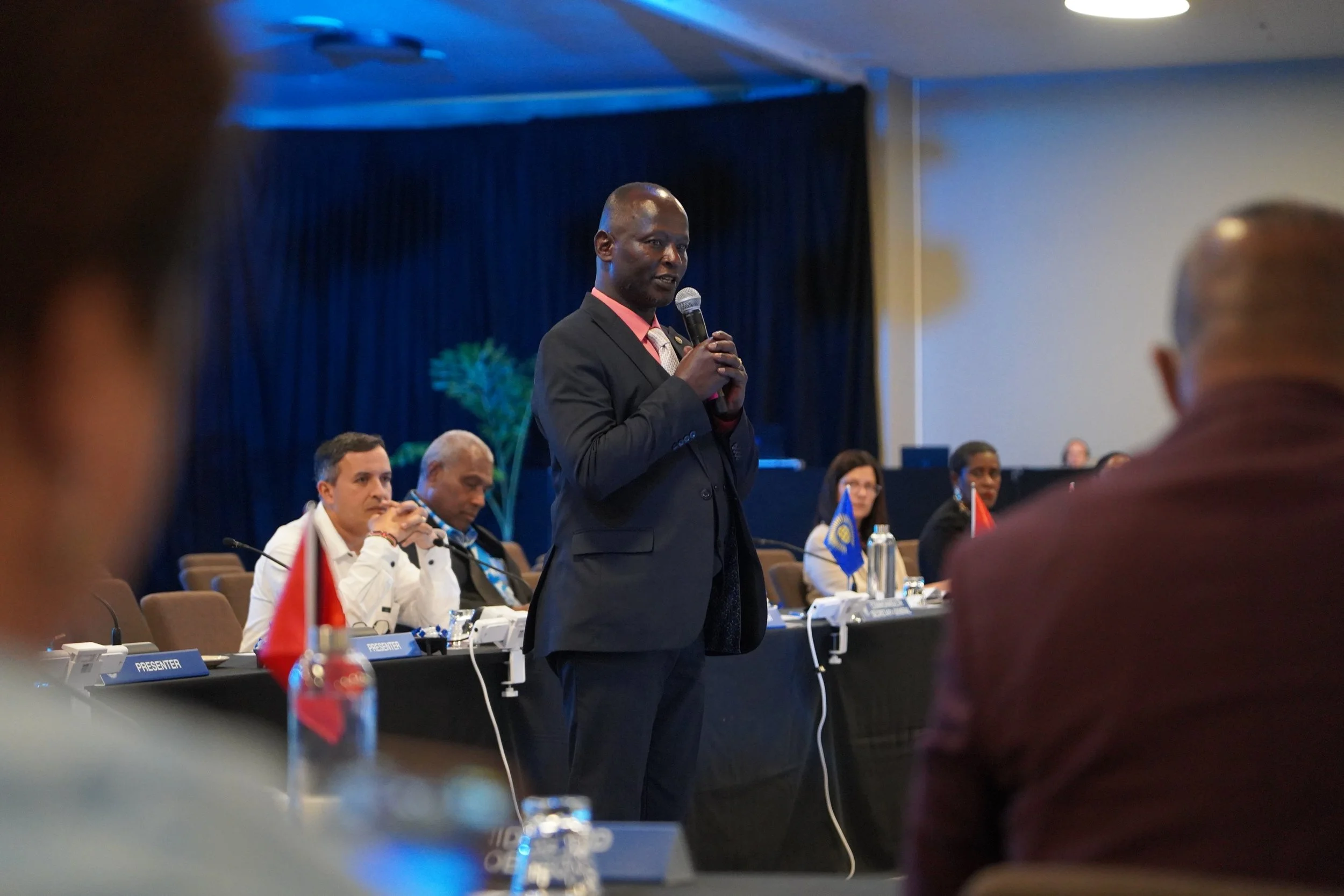
Legal Education Director, Morris Kaberia, addressing Commonwealth Law Ministers during the Commonwealth Law Ministers Meeting in Fiji.
“We never criticise from a distance or advise at arm’s length. We stand shoulder to shoulder with those delivering justice.”
This is the posture we brought to Fiji.
Rather than speaking about reform from outside the system, we responded to the invitation by entering the conversation in proximity. We shared the practical lessons of almost two decades working inside prisons across East Africa and presented a clear pathway for governments seeking to strengthen access to justice from within.
Our delegation introduced a framework for replication across the Commonwealth, grounded in invitation, trust, and disciplined piloting. We shared a clear pathway for governments to test and scale prison community capacity-building inside their own systems, moving from awareness and paralegal training to in-prison legal practice and accredited legal education.
We received exceptionally warm feedback, especially from countries where resources are limited and expensive reforms are often out of reach. Many leaders, including the Attorney General of Fiji, shared that the most striking moment of the conference was hearing Morris recount his journey from death row to becoming an attorney, which grounded the conversation in lived reality and possibility.
“Whether minister, judge, or prisoner, we all long to live lives that count for something.”
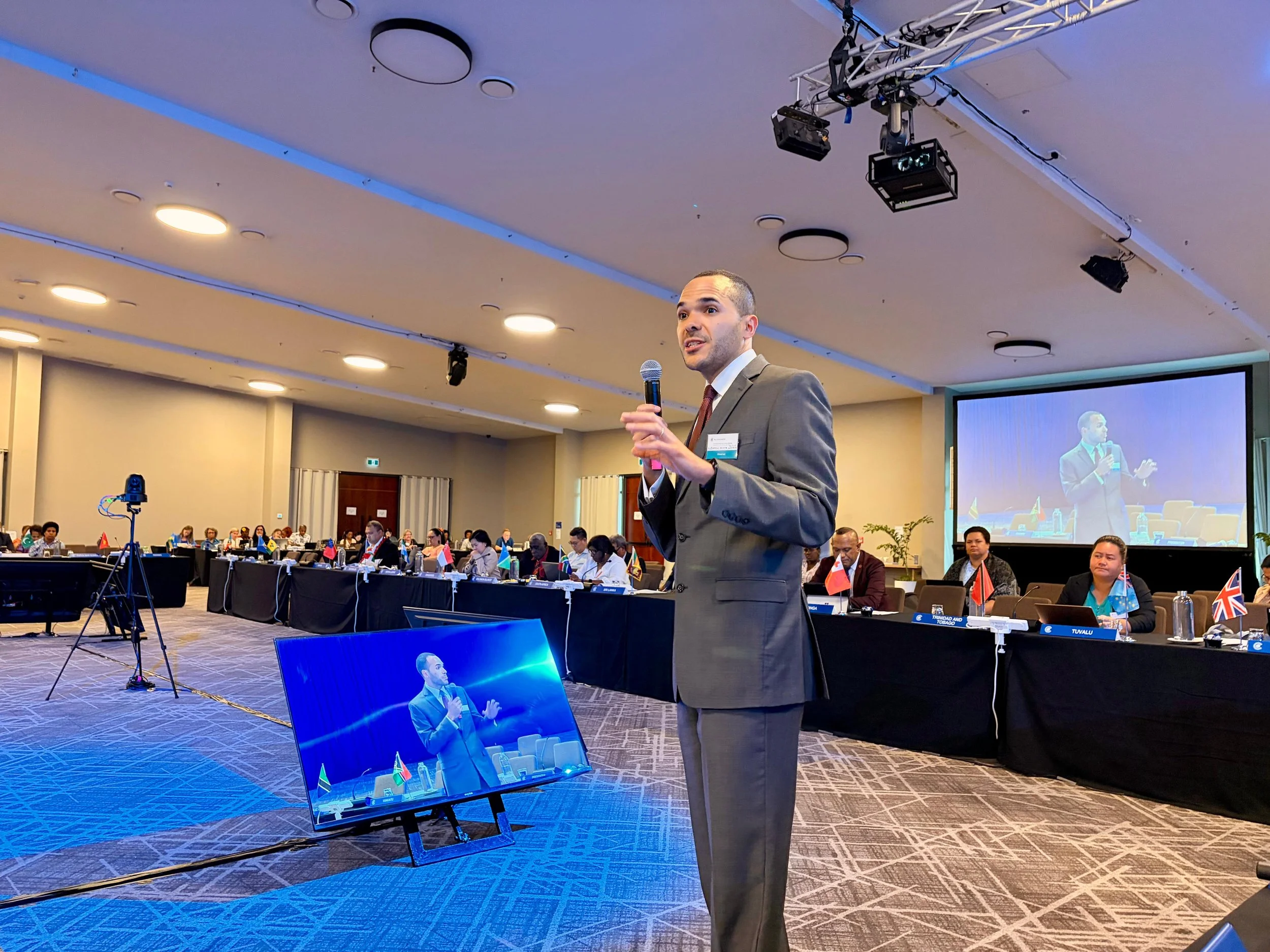
Founder and CEO, Alexander McLean, speaking at the Commonwealth Law Ministers Meeting in Fiji.
Throughout the week, we held discussions with governments, legal institutions, and partners interested in adapting this model to their own contexts. The global justice gap remains vast. In many countries, the majority of people in custody have never seen a lawyer. Court systems are overwhelmed. Legal aid is limited or absent. We are demonstrating a scalable response. By building legal capacity inside institutions, countries can reduce unnecessary detention, improve efficiency, and strengthen public confidence in the rule of law.
We do not see prisons as static environments. We see communities where powerful minds are unleashed. When people in custody and officers step into the law together, relationships change. Authority becomes shared. Conflict reduces. Institutions become stronger. Justice becomes more credible.
This vision turned into action at the culmination of our time in Fiji. Rather than leaving these conversations at the level of policy and theory, we invited Commonwealth Law Ministers to step inside the institution itself. At Lautoka Correctional Centre, they gathered with correctional officers and incarcerated people in a shared space of dialogue and reflection, marking the first time such a visit had taken place alongside a Commonwealth Law Ministers Meeting.
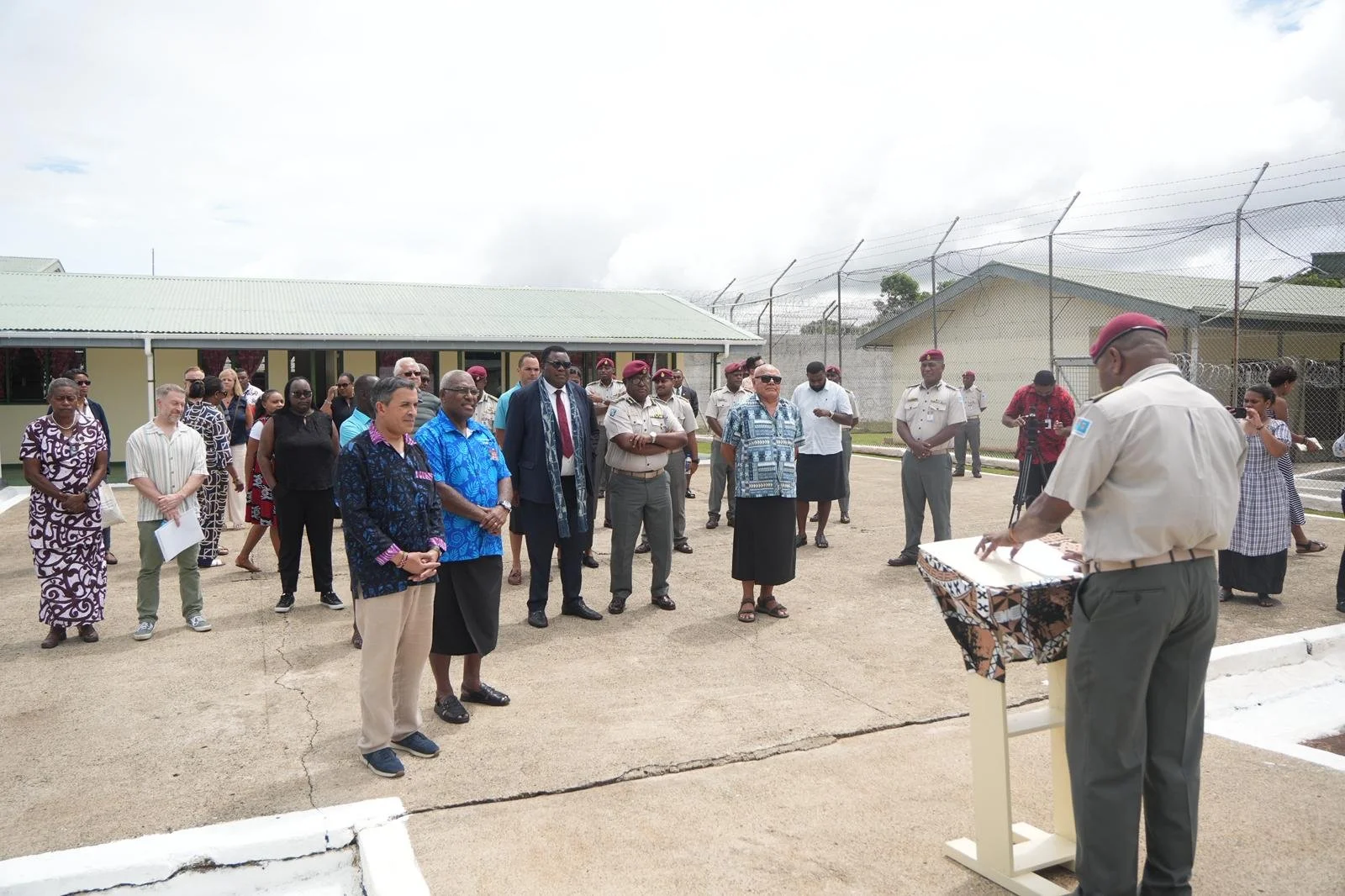
Commonwealth Law Ministers arriving at Lautoka Correctional Centre, welcomed by Fiji Corrections leadership as they entered the institution for the first visit of its kind during the Commonwealth Law Ministers Meeting.
It was a powerful moment of proximity. Ministers encountered not abstract systems, but real people, real relationships, and the daily realities that shape justice outcomes. In doing so, the visit embodied what we believe: that transformation begins from within, and that when those who shape justice stand in solidarity with those who live its consequences, power begins to shift.
“In adversarial justice systems that are often deeply divided, we choose to work together as unlikely allies.”
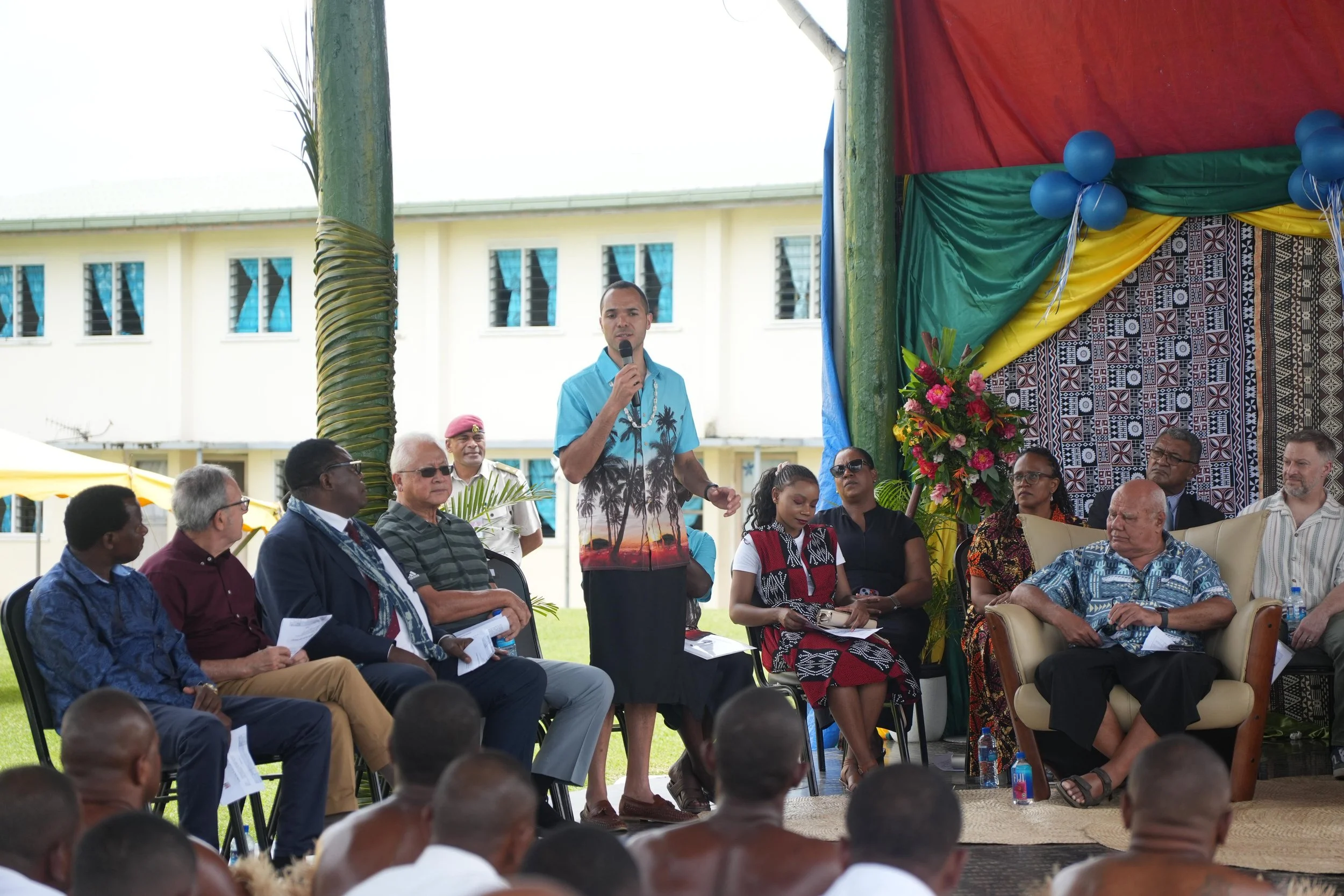
Alexander McLean addressing Commonwealth Law Ministers, correctional leaders, and the incarcerated community at Lautoka Correctional Centre
The visit demonstrated relational systems change in practice. Transformation does not come only through policy or litigation. It is built through trust and requires unlikely alliances between people in custody, officers, judges, lawyers, and policymakers. Convenings like this create the conditions for reform because they address relationships and power dynamics at their root.
Sharing life moments and a meal reinforce this. As part of the visit, we hosted a Jeffersonian-style lunch inside the facility, inviting all participants into a single conversation about justice. Breaking bread together created space for stories to be shared, for people to see one another’s humanity, and for the trust that underpins lasting reform to take root.
Relationships grounded in solidarity are at the heart of our model. They allow what often seems impossible to become possible: reframing defenceless communities as defenders of the defenceless. People most affected by injustice becoming legal actors, representing others, improving court efficiency, and strengthening the system for all.
In bringing this approach to Fiji, we witnessed extraordinary openness from the national Corrections Service and the Commonwealth Secretariat. Their leadership, bravery and shared commitment to strengthening justice systems made this moment possible.
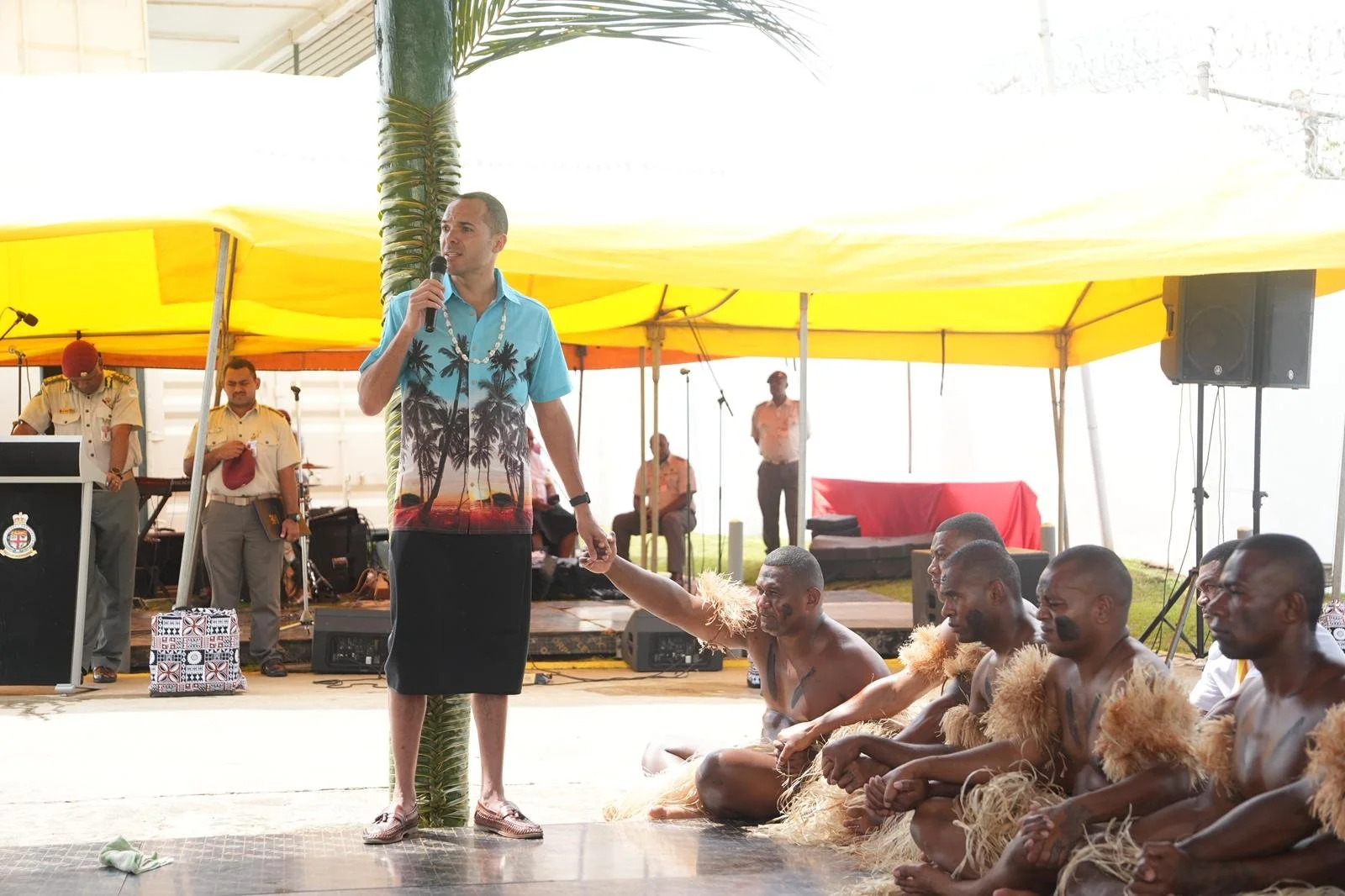
Alexander McLean in a moment of solidarity during the Commonwealth Law Ministers’ visit at Lautoka Correctional Centre, Fiji.
“Justice work is multi-generational work. We must not get tired of doing work that has no end.”
Transformation rarely happens quickly. It is built over years through persistence, humility, and the steady formation of people who carry the work forward long after a single organisation or moment has passed.
The week we spent in Fiji reminded us that this work is sustained through many small acts of courage and conviction. Each of us does our part in the marathon of justice reform, knowing we are carrying a torch entrusted to us by those who came before, and that those who come after will see the fruits of what we begin. We have a responsibility not only to those we serve today, but to the communities who will inherit the systems we shape.
We are grateful for the week spent in Fiji and for the seeds planted during this time. It reaffirmed our belief that relationships can transform justice systems anywhere in the world by building unlikely alliances, strengthening trust, and creating the conditions for lasting reform.