
The Justice Defenders Dispatch | Q1 2026
Across Kenya and Uganda, most cases do not begin with a clear path. They begin with arrest, confusion, and time spent waiting, often without understanding the charge, the process, or the options available.
The majority of people in prison are not serving final sentences. They are navigating a system that is procedurally complex and practically inaccessible.
What happens next depends less on the facts of the case than on whether someone can act within the law.
In Q1 2026, 8,201 defenceless people were supported and 4,006 were released. The cases that follow represent a selection of those outcomes.
They show what changes when paralegals inside prisons provide frontline legal support to those most exposed to the system. They show that when legal knowledge is placed in the hands of those who need it most, fair hearings become possible and outcomes begin to shift.
Resolution through reconciliation
When cases are diverted before they take hold
Patrick Kioko Muli was arrested in February 2026 and charged with malicious damage to property. At 24, he entered Machakos Main Prison in Kenya at the point where most cases begin to stall: early detention, limited information, no clear path forward.
He approached the Justice Defenders legal office. A trained paralegal assessed the case and initiated Alternative Dispute Resolution (ADR) with the complainant.
This required more than agreement. It required structured mediation, legal framing, and the ability to move the case outside the default trajectory of court delay.
The matter was resolved. Patrick secured bail and was released on 2 March 2026.
In the same facility, similar interventions followed:
James Makau Sila, aged 24, was arrested in January 2026 and charged with stealing contrary to Sections 268 and 275 of the Penal Code. Paralegal Fergus Mutie Mutunga facilitated reconciliation through ADR, leading the complainant to withdraw the matter. The case was formally closed on 2 March and James released the same day.
Boniface Matheka Nzuki, 24, was arrested in January 2026 and charged with creating disturbance contrary to Section 95(1)(b) of the Penal Code. Through mediation led by the same legal office, the parties reached agreement. The case was withdrawn, and Boniface was released on 23 February 2026.
The legal tools were available from the outset. Without intervention, they remain unused.

Paralegal Officer Agnes Tumanka and Paralegal Pamela Nyanje dial contact person in ADR case.
Time Reclaimed
When sentences are corrected, not endured
Samuel Mburu Wanyoike had been in custody since 2012. Convicted in 2013 and sentenced to life imprisonment, he had exhausted appeals at every level.
The case was closed in practice, but not in law.
Inside Kamiti, a Justice Defenders paralegal identified a shift in constitutional interpretation around indeterminate life sentences. A petition was filed, not to revisit guilt, but to challenge the legality of the sentence itself.
The High Court directed resentencing.
In February 2026, the trial court reduced the sentence to 20 years, effective from the date of arrest. Samuel had already served that time.
After more than a decade in custody, he became immediately eligible for release.
The law had evolved. Without access, his sentence would not have.
Early Intervention
When timing determines the outcome
Moses Okia was arrested in August 2025 and charged with operating a gaming business without a valid licence. He was remanded to Murchison Bay Prison.
Without intervention, the likely outcome was a custodial sentence served in full.
Inside the prison legal office, he met a trained paralegal who introduced a different pathway: plea bargaining. The process was broken down into clear steps—admission of responsibility, negotiation of sentence, and the possibility of a non-custodial outcome.
With guidance, Moses pursued this route. On 14 October 2025, the court sentenced him to eight months’ imprisonment, with the option of a fine. He paid the fine immediately and was released the same day.
Samuel Njaramba Kamande was 17 when he was charged with robbery with violence—one of the most serious offences under Kenyan law.
Without early legal direction, the case would likely have followed a predictable path: prolonged detention, high-stakes trial, severe sentencing.
Instead, he received advice at the outset. A Justice Defenders paralegal guided him through plea bargaining, taking into account his age and status as a first-time offender. The charge was reduced. The sentence, four months, aligned with time already served.
He was released on 6 February 2026, with the possibility of returning to school.
The legal framework did not change in either case. Timing did.

Jacinta Nyambura taking notes as deputy registrar of Thika Women Prison.
Bail as Access
When the difference is procedural, not legal
Half of the people in prison across East Africa are not sentenced. They are waiting.
Wamala Enock had spent over two years on remand without trial or indictment. His case had not progressed. His detention had.
After attending a legal awareness session, he approached the prison legal office. A paralegal explained the requirements for bail—criteria he had never been guided through.
The intervention was precise:
Identification and preparation of sureties
Contact with family through structured communication channels
Drafting and filing of a bail application
On 30 October 2025, the court granted bail.
Enock walked out of custody while awaiting trial.
Mugenyi Bosco’s case followed a similar pattern. Charged with forgery related to a land transaction, he remained in custody without understanding how to meet bail conditions. In the prison legal office, a paralegal broke down the requirements, focusing on the role of sureties.
A short window was created for him to coordinate with relatives and prepare documentation.
On 23 October 2025, the court granted non-cash bail.
He returned to his family while his case proceeds.
Bail is not inaccessible by law. Too often it is inaccessible in practice.
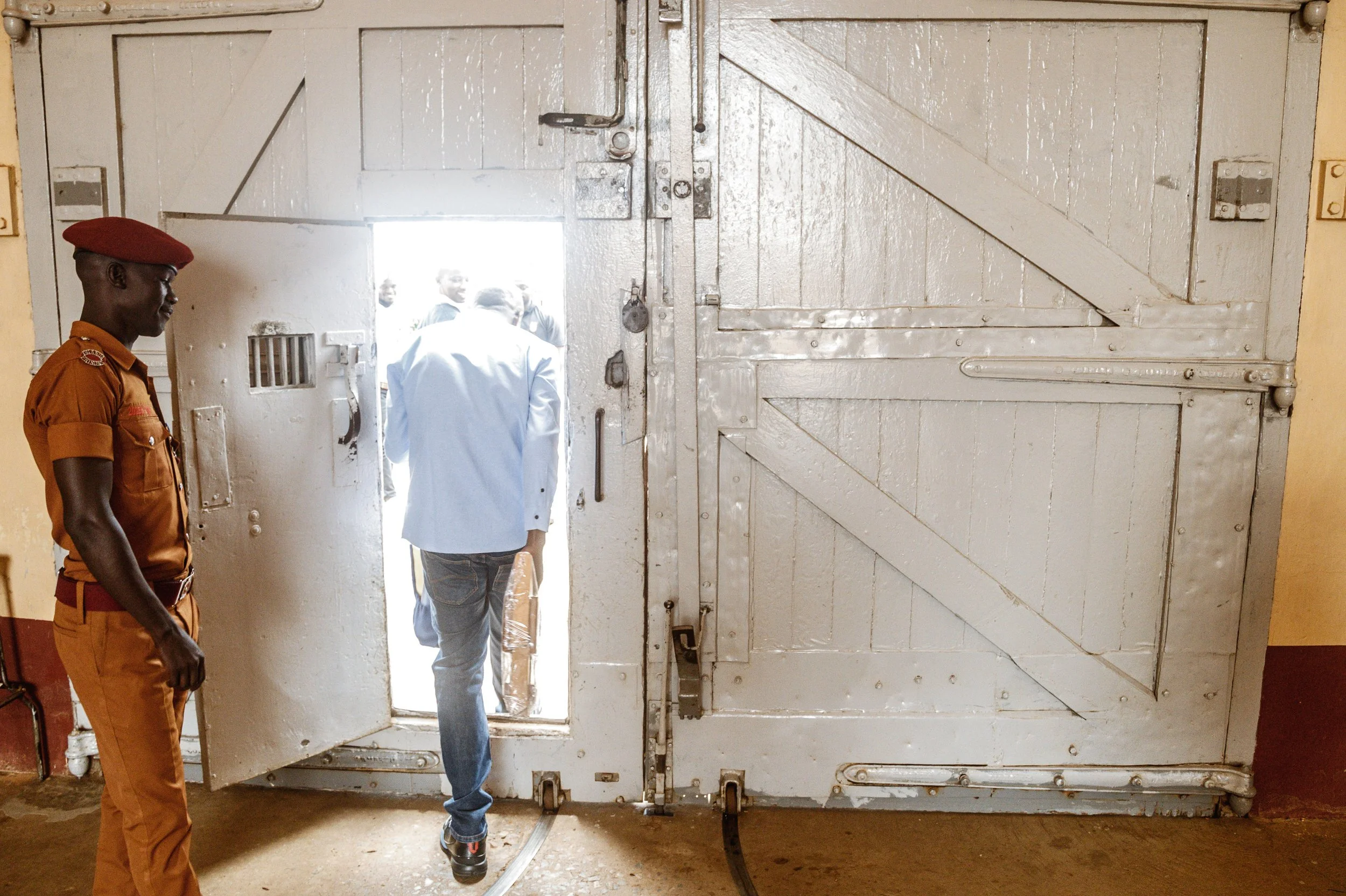
Law graduate and lead paralegal Mutebi Ismail leaving Luzira Upper Prison after 15 years of incarceration.
Legal Defence
When the case collapses under scrutiny
Amos Munyao had been in custody since 2024, facing multiple charges. His case proceeded to trial.
A Justice Defenders paralegal reviewed the file and identified a critical issue: the prosecution had not established sufficient evidence to sustain the charges.
A no-case-to-answer submission was prepared and presented.
The court agreed.
Amos was acquitted.
Without that intervention, the case would likely have continued, extending detention despite the absence of evidence.
Legal defence is not only about argument. It is about recognising when there is no case to answer.
System Correction
When errors in law are identified and fixed
Juston Akanga Musundu had been sentenced to a total of 24 years’ imprisonment. The sentence, as recorded, required him to serve terms consecutively.
The trial court had not ordered that.
A Justice Defenders paralegal identified the discrepancy between the judgment and its recording. An appeal was filed.
The High Court corrected the error, confirming that the sentences should run concurrently.
The result was a reduction in total time in custody.
The system did not correct itself. It required someone able to read it.
Prolonged Detention
When the system delays, and intervention forces movement
Ssemambo Joshua was arrested in September 2024 and charged with murder following the death of a suspected thief in his neighbourhood. The charge placed him into one of the slowest-moving tracks in the justice system.
For over a year, his case remained in custody without resolution.
Inside Luzira Upper Prison, he approached the Justice Defenders legal office. A paralegal identified a critical threshold: mandatory bail eligibility, which applies after a defined period on remand for capital offences.
The issue was not legal eligibility. It was timing and preparation.
The intervention focused on:
Tracking the exact period required to qualify
Preparing the bail application in advance
Ensuring all procedural requirements were met at the point of eligibility
On 12 November 2025, the High Court granted bail.
Joshua was released to await trial.
In cases like this, the system does not move on its own. It requires pressure applied at the right moment, through the right mechanism.
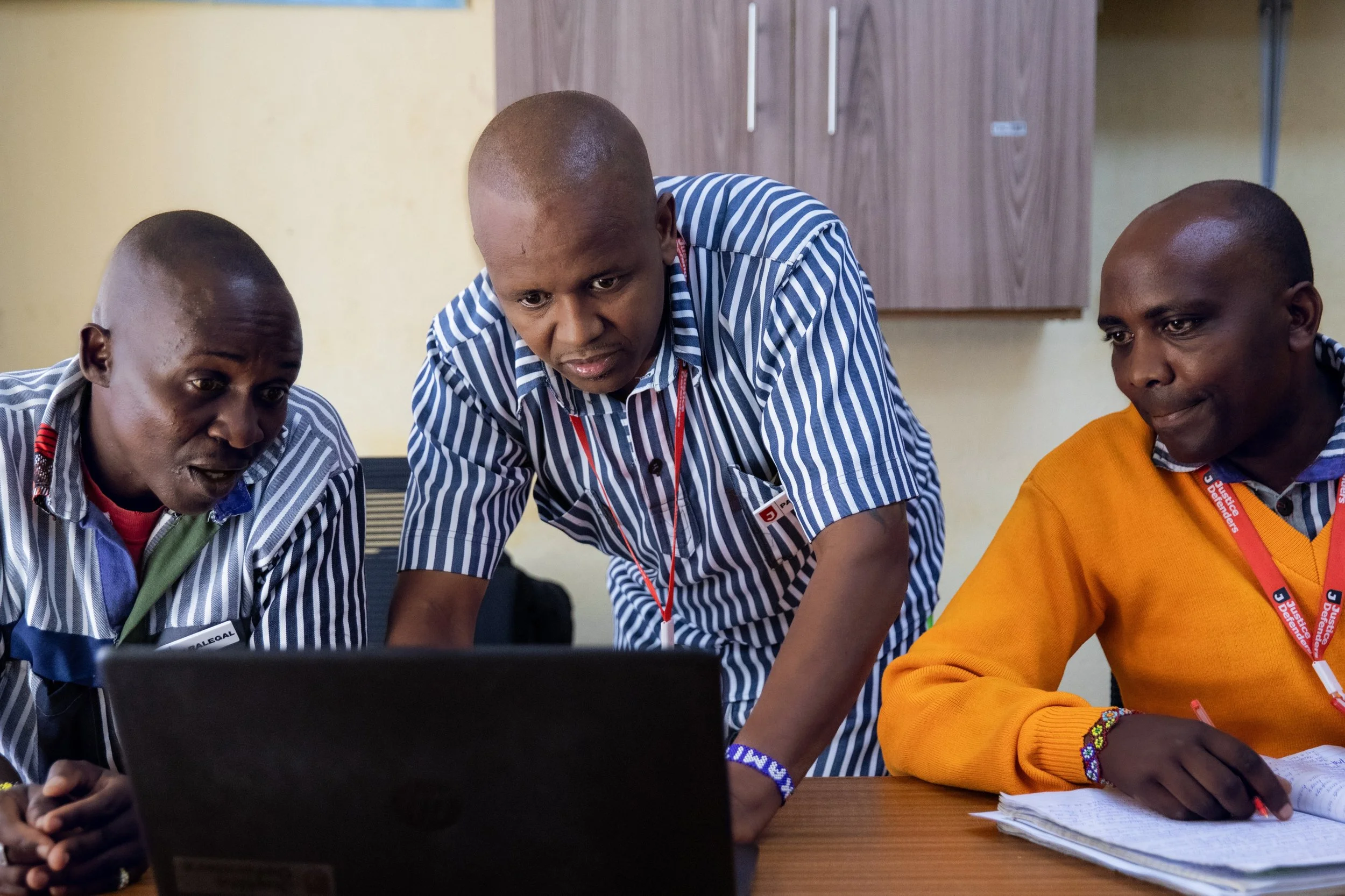
Fergus Mutie, Julius Kamitu and David Kioko work on submissions for court.
Family-Level Resolution
When cases de-escalate beyond the courtroom
Mukambwe Nicholas had spent eight months on remand, charged with trespass and obtaining money by false pretence.
The case had stalled in the familiar pattern: limited communication, no structured engagement with the complainant, and no clear direction toward resolution.
After accessing legal advice through Justice Defenders, two things happened in parallel:
A bail application was successfully filed and granted
Negotiations with the complainant were initiated at family level
This second step is rarely activated without guidance.
The case began to move toward dismissal through reconciliation, reducing the likelihood of prolonged litigation and further detention.
The outcome was not only release. It was de-escalation.
Justice, in this form, does not end at the courtroom door.
Speed of Intervention
When early action prevents long-term consequences
Naduli Pius was arrested following a fatal road traffic accident on the Kampala–Jinja Highway and charged in connection with the death of a passenger.
Serious charge. High risk of extended detention.
Within days of admission to prison, he accessed the legal office. A paralegal assessed the case and focused immediately on one objective: rapid bail readiness.
The intervention was compressed:
Identification of sureties within jurisdiction
Preparation of required documentation (local council letters, identification)
Immediate coordination with family
Two weeks later, on 20 October 2025, the court granted cash bail.
The speed is the point.
Without early intervention, this case would likely have followed the standard trajectory: months on remand before meaningful action. Instead, the window was narrowed to weeks.
Time in custody is not only about sentence. It is about how quickly the system is engaged.
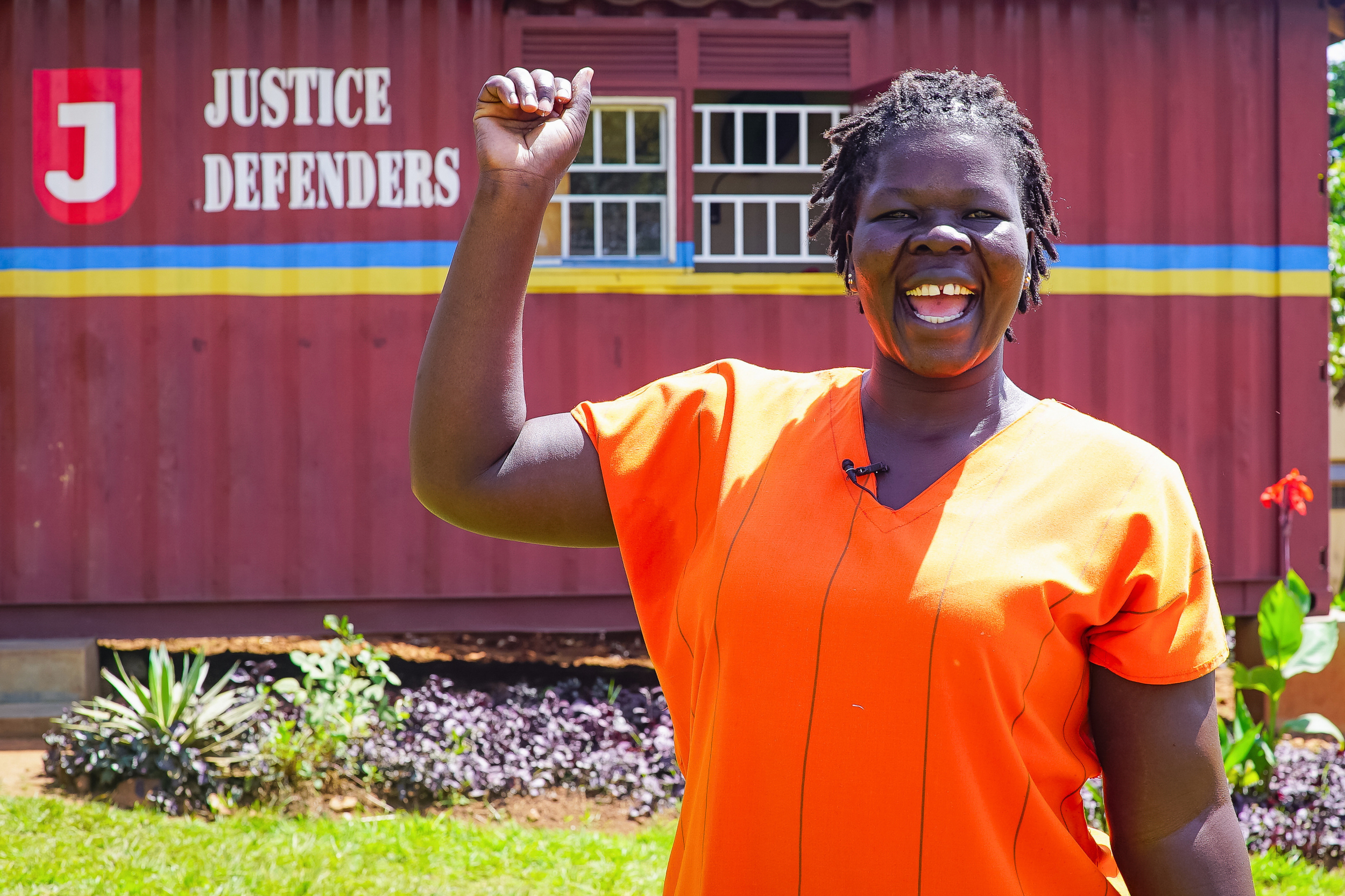
Evalyne Atimango, a University of London graduate paralegal, applies her legal training to real cases inside the Luzira Women prison legal office in Uganda.
Closing
Legal tools that already exist begin to function when they are understood and applied. What changes is not the law, but access to it.
That access is led from within. The paralegals driving these interventions know the system through lived experience. They recognise the points where cases stall because they have faced them. They act early because they understand the cost of delay. And they serve with bravery because the stakes are not abstract.
This is a repeatable process, grounded in people who know what it means to be without a defence and are committed to ensuring others are not.
Each quarter will continue to surface the cases that show how this work shifts outcomes from within.